
Plan it: How to Book a Yacht Charter in Croatia – Step-by-Step Guide
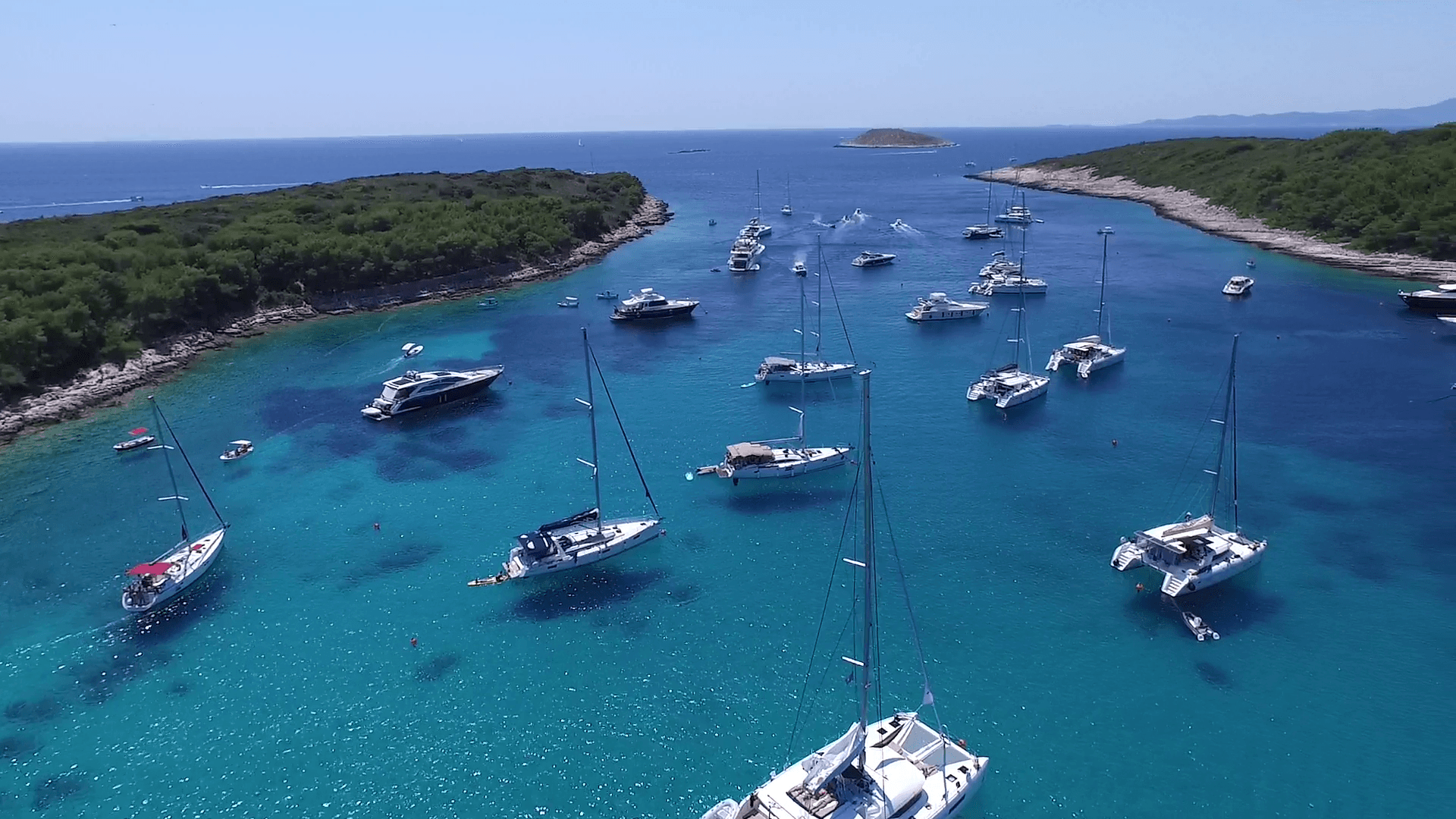
Three kinds of boat leave the marinas around Split every Saturday: sailboats, catamarans and motor yachts. They go to the same islands. They get there at different speeds, burn different amounts of fuel and feel nothing alike on the way.
This guide compares the three on the things people ask us about most: speed, comfort, fuel, the feel of sailing, and how many islands you can fit into a week.
The three boats in one paragraph each
A sailboat has one hull, a deep keel and a small engine. It leans over when the wind fills the sails. It is the least expensive of the three to charter and to berth, and it is the one that sails best.
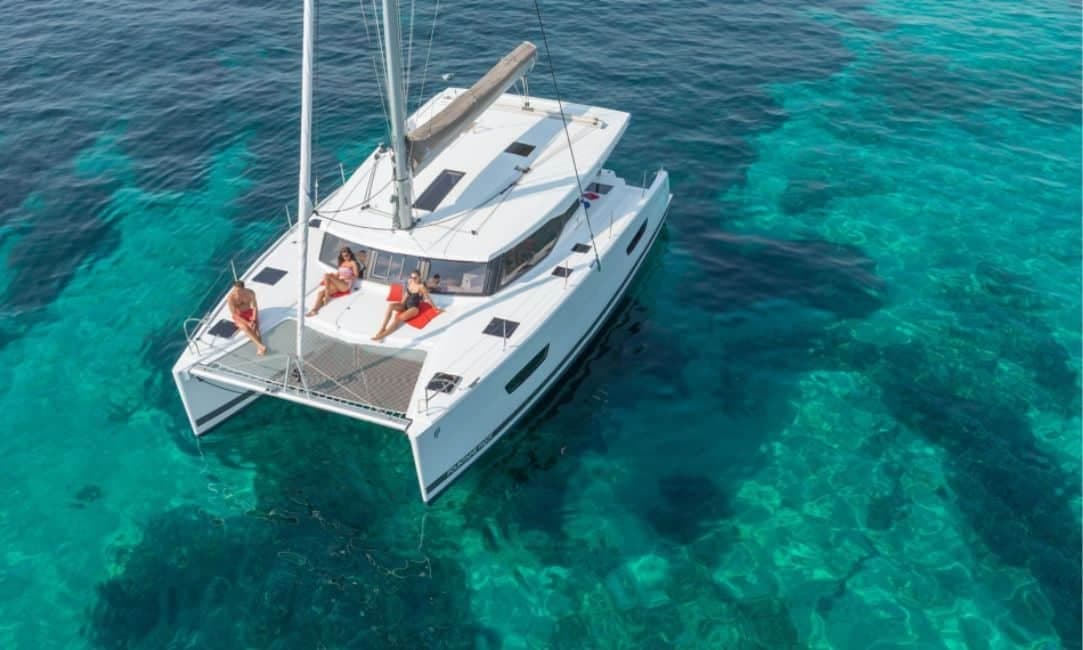
A catamaran has two hulls, two engines and a wide deck between them. It stays almost level under way and at anchor. You get the most living space for the length, and you usually pay more for it, in the charter price and in marinas.
A motor yacht has no sails. One or two large engines push it at three or four times the speed of the other two. It covers the most ground in a day and uses by far the most fuel.
Which islands can you visit from Split
All three boats reach the same islands. What changes is how long each leg takes. Distances below are approximate, measured from the marinas around Split.
- Šolta (Maslinica, Stomorska): about 10 nautical miles. An easy first or last night.
- Brač (Milna, and Bol with the Zlatni Rat beach): 10 to 25 miles, depending on the harbour. See our Brač guide.
- Hvar (Hvar Town, Stari Grad, Vrboska) and the Pakleni Islands just off it: about 22 to 25 miles. See our Hvar guide.
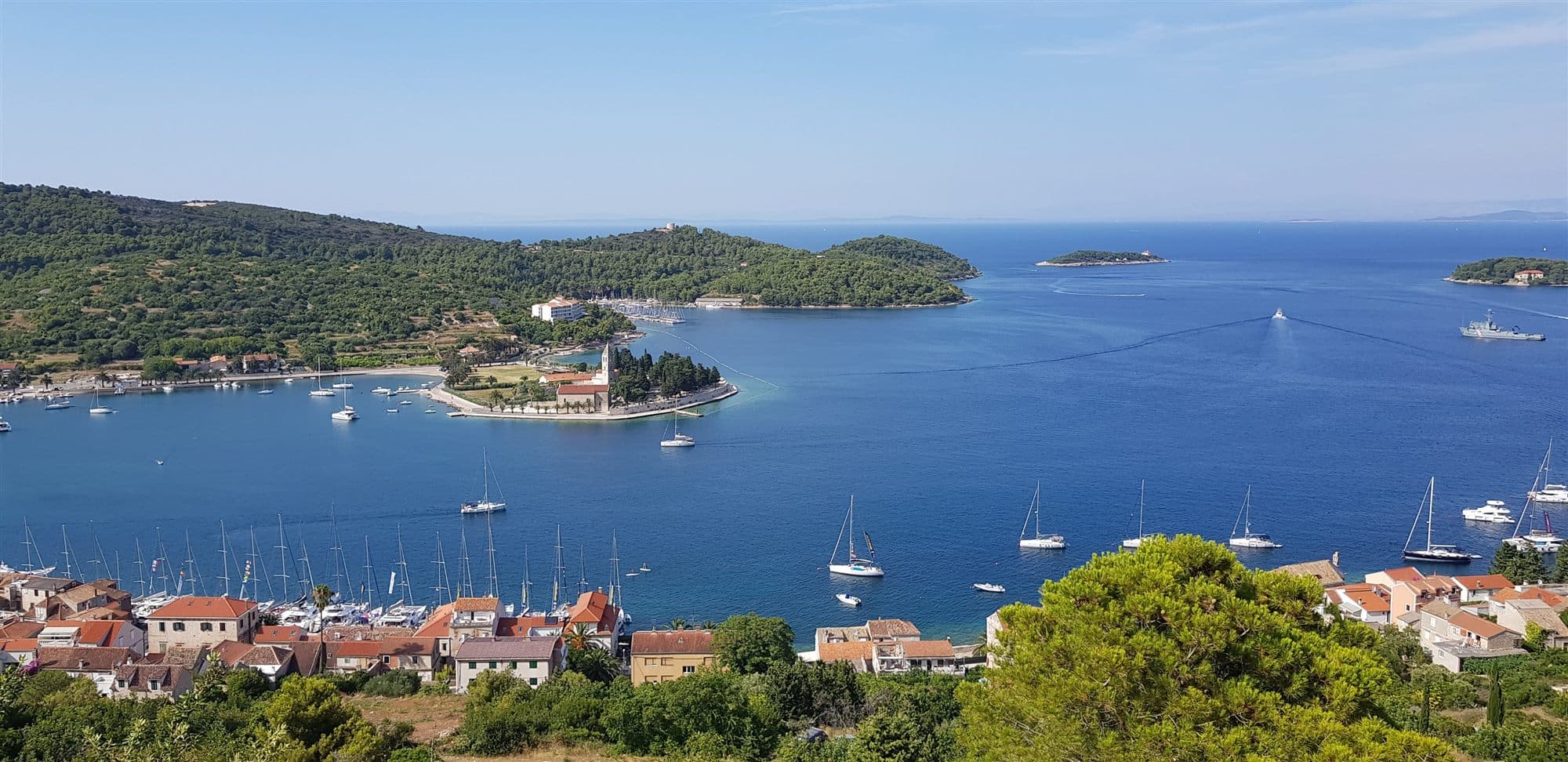
- Vis (Vis Town, Komiža) and the Blue Cave on Biševo: about 30 miles from Split. It is the farthest out and the most open crossing. See our Vis guide.
- Korčula: possible in a week, with longer days. See our Korčula guide.
- Drvenik Veli and Drvenik Mali, with the Blue Lagoon at Krknjaši: close to Trogir, good for a short day.
Lastovo and Mljet are farther south. They suit a ten to fourteen day trip better than a single week.
A sailboat or a catamaran comfortably covers 15 to 30 miles a day, which is three to five hours under way. That makes a classic week: Šolta or Brač, Hvar and the Pakleni Islands, Vis, and back. Our Split to Vis route walks through it day by day.
Speed: how far you get in a day
- Sailboat: 5 to 7 knots, under sail or engine.
- Catamaran: 6 to 8 knots.
- Motor yacht: 15 to 25 knots at cruising speed.
In practice, Split to Hvar Town takes a sailboat about four hours and a motor yacht about one. Split to Vis is five to six hours on a sailboat and under two on a motor yacht.
Speed changes the shape of the week more than the list of islands. On a sailboat the passage is part of the holiday. On a motor yacht you can swim in one bay in the morning, have lunch on another island and still be moored in town before the quay fills up.
Comfort: space, motion and noise
The catamaran is the most comfortable at anchor. It does not heel, it rolls less in a swell, and the cockpit and saloon sit on one level. Cabins are split between the two hulls, which gives each couple or family some privacy. Families with small children and guests who worry about seasickness usually do best here.
The sailboat is cosier. You step down into the saloon, the cabins are closer together and the boat leans while sailing. Some people love that and some do not. At anchor in a calm bay it is perfectly comfortable.
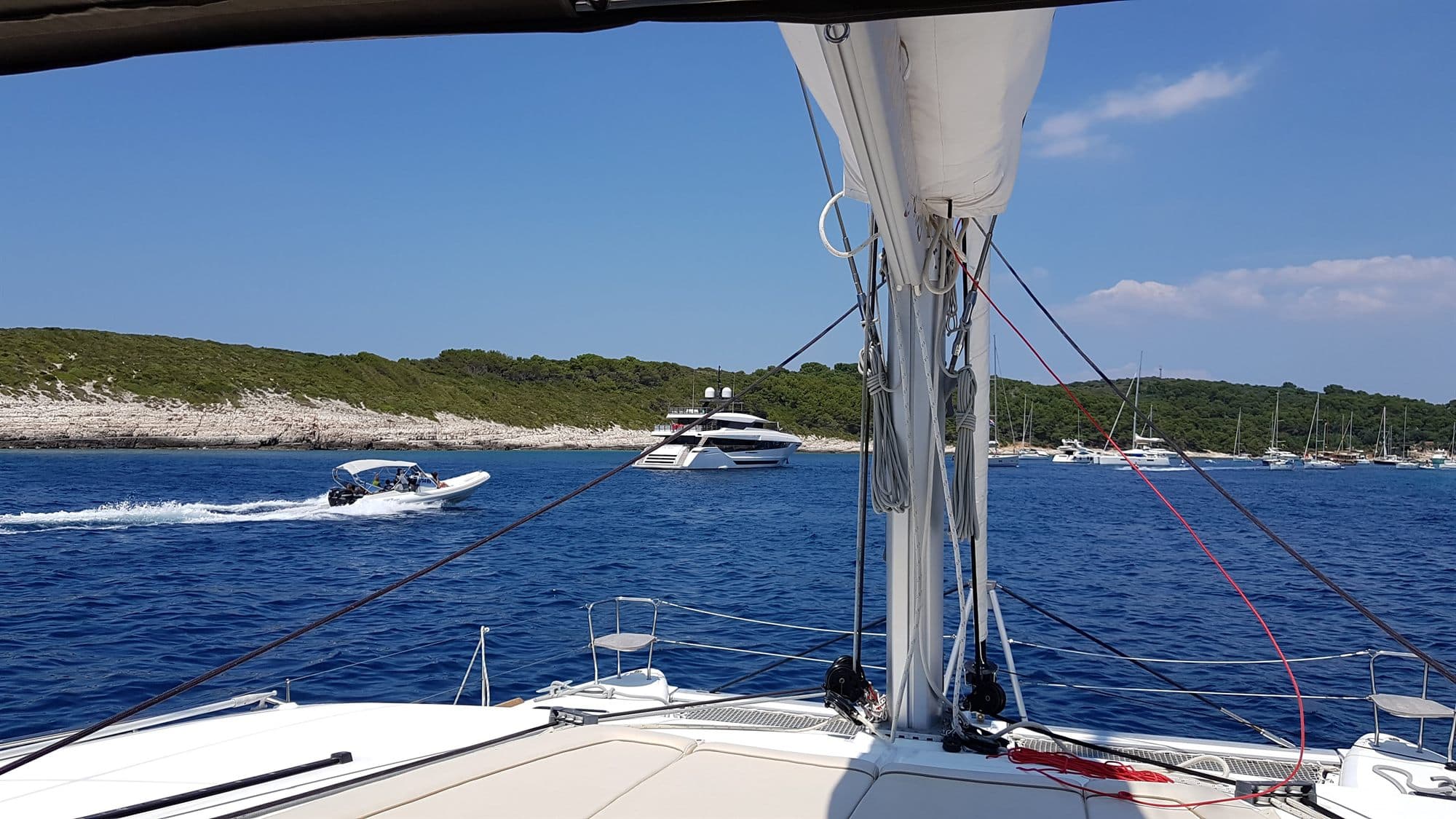
The motor yacht is comfortable in a different way. It often has air conditioning and a generous sun deck, and short passages mean less time under way. The engines are loud at speed, the boat can slam in a short chop, and at anchor it rolls more than a catamaran.
Neither hull cures seasickness. A boat that lets you stay on deck, in the breeze, watching the horizon is the one that helps.
Fuel: what each boat burns
These are typical figures for charter boats of 40 to 50 feet. The real number depends on the boat and on how you drive it.
- Sailboat: about 3 to 5 litres an hour when motoring. A week usually uses 80 to 150 litres.
- Catamaran: about 6 to 10 litres an hour on both engines. A week usually uses 150 to 300 litres.
- Motor yacht: often 60 to 150 litres an hour at cruising speed. A week can easily use 500 to 1,500 litres.
On a sailboat or a catamaran, fuel is a small line in the budget. On a motor yacht it is one of the largest, so ask for the boat's consumption at cruising speed before you book and plan the route around it. Slowing down by a few knots can cut the bill sharply.
You return every charter boat with full tanks, so you pay for exactly what you used.
Sailing with the wind
In summer the usual wind around Split is the maestral. It is a north-westerly that builds around midday, blows 10 to 20 knots through the afternoon and dies at sunset. Mornings are often calm, so every sailing crew motors for part of the week.
On a sailboat this is the reason to come. The boat heels, the engine goes quiet and the helm comes alive in your hands. A monohull also points closer to the wind, so you sail more of the week and motor less.
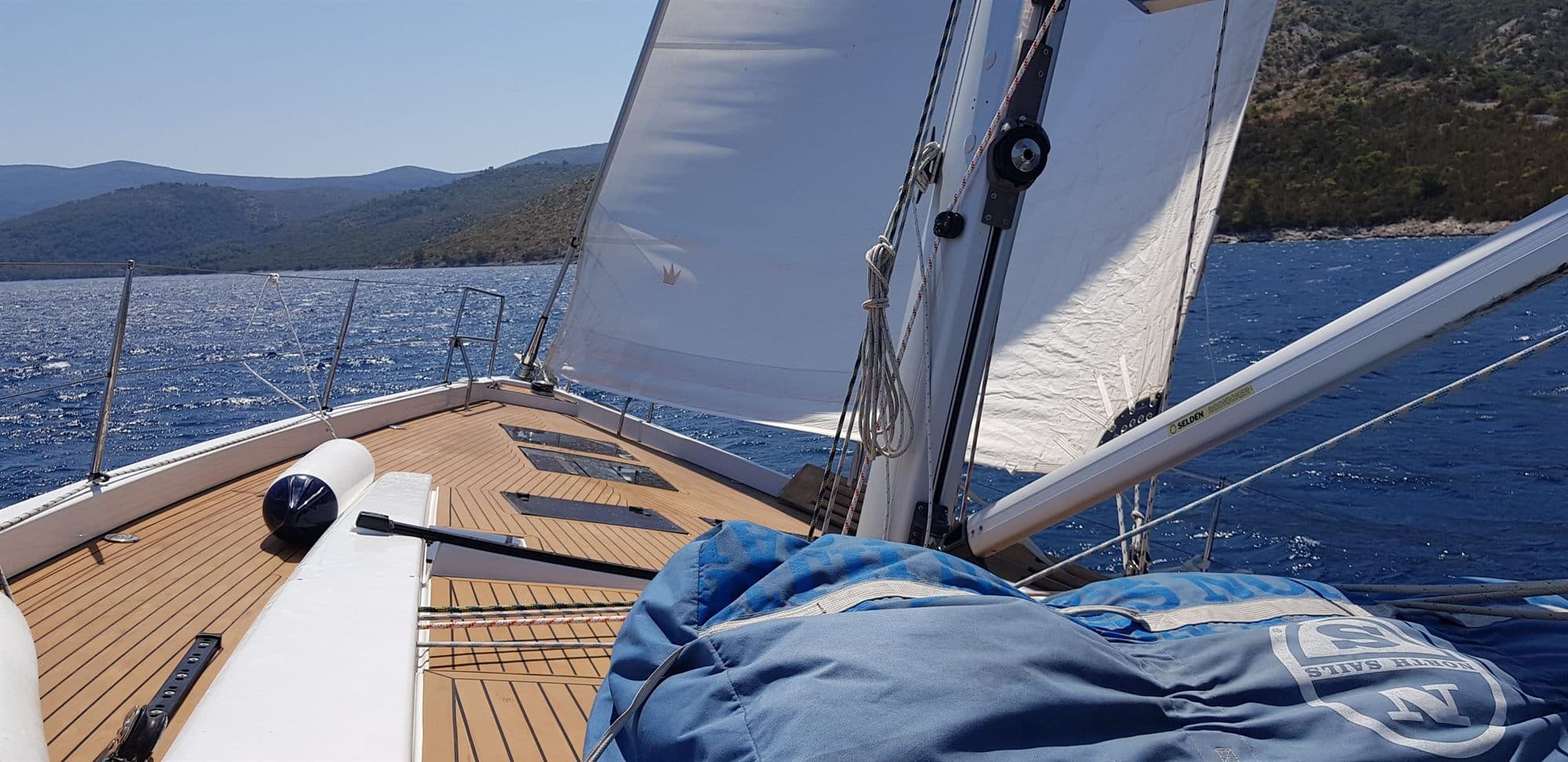
A catamaran sails too, with less feel. With the wind from the side or behind it is quick and relaxed. Towards the wind it struggles, and many crews start the engines.
A motor yacht does not sail at all. Wind matters to it only as waves.
Two other winds can change the plan for a day. The bura is a strong, gusty north-easterly that arrives quickly. The jugo is a south-easterly that builds slowly and brings swell. Check the forecast every morning, whatever you charter. Our guide to weather conditions in Croatia explains all three winds.
Which boat for which crew
- You want to sail, or keep the cost down: a sailboat.
- You want space and a level deck, with some sailing: a catamaran.
- You want to see the most in the least time, and fuel is not a worry: a motor yacht.
If the choice is between the two sailing boats, read catamaran or monohull, which goes deeper.
If nobody aboard holds a skipper's licence, that does not narrow your choice. We can add our own skipper to a bareboat for whole weeks. If someone in your group will skipper, the charter company checks their licence and VHF certificate at check-in. Our guide to skipper's licences and certificates lists what Croatia accepts.
When you know which boat fits, open the boat search on our site and filter by boat type. Or send us a quote request with your dates. We reply by email within minutes with the boats free for those dates, each checked live.