
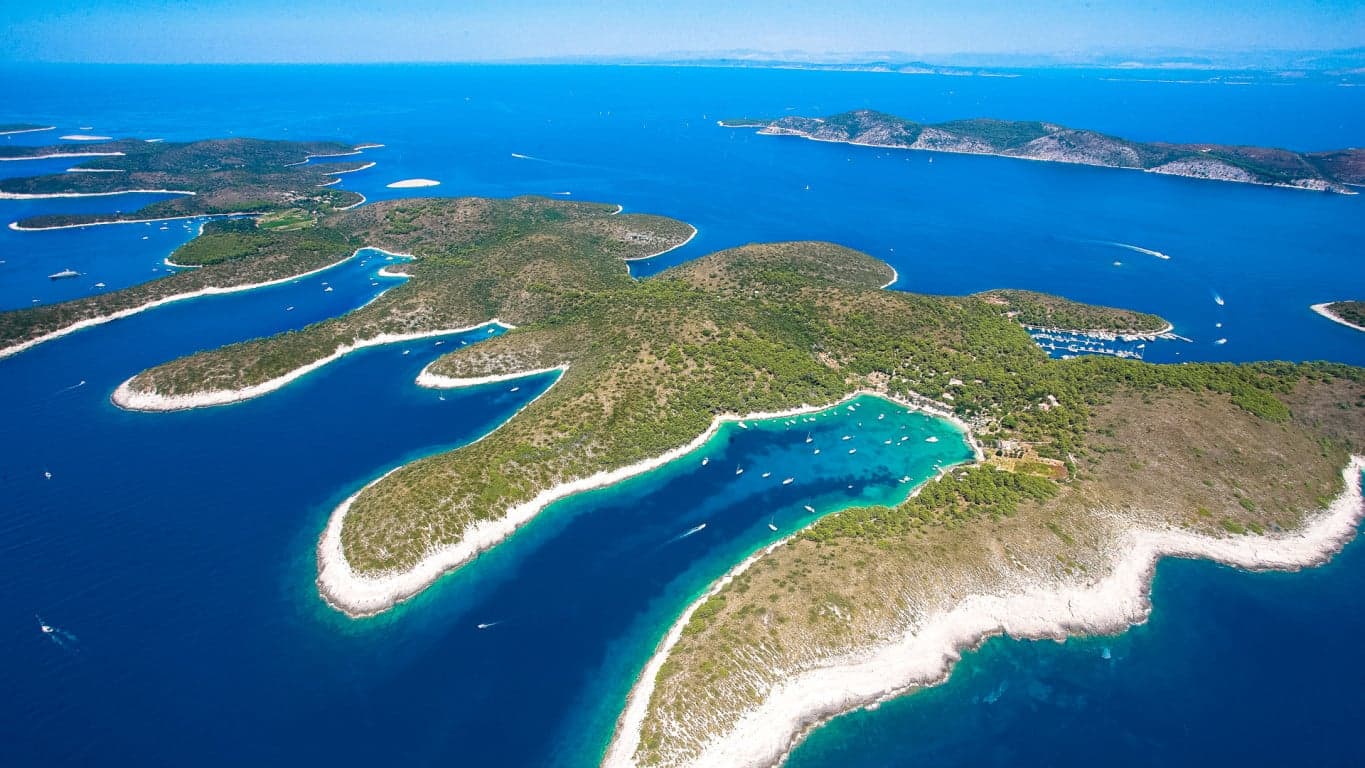
If you look at a map of Europe, Croatia’s coastline is a long, thin smile stretching down the Adriatic. From the helm of a boat it feels even longer – a chain of islands, stone towns and quiet bays that never quite runs out. For many guests this is the perfect place for a first sailing holiday, and for a lot of skippers it becomes the place they return to again and again.
This page is your high-level guide to sailing in Croatia as a whole. On the Destinations section we compare different regions. Here we zoom out even further: what the coast is like, how a typical week feels, when to come, which boats work best and how to choose between famous names like Split, Zadar, Šibenik and Dubrovnik.
Why Sail in Croatia?
Croatia sits in a very comfortable middle ground. The distances between islands are short enough for relaxed day-sailing, yet the coast is long enough to keep you busy for many seasons. The weather is generally kind in summer, the water is clear, and most islands still feel like real places where people live year-round, not just postcard sets.
For charter guests it also helps that Croatia is well-organised. Marinas, mooring fields and harbour facilities are widely available; provisioning is simple; and there is a mature charter industry with many boats to choose from. Whether you book a compact sailboat, a family catamaran, a comfortable motor yacht or a crewed luxury yacht, the coast is set up to support you.
Croatia at a Glance – Coastline, Islands & Regions
Croatia has about 1,780 km of mainland coast, over 1,200 islands and about 85 marinas, and almost all charter sailing happens between Pula in the north and Dubrovnik in the south. The largest share of the boats — about a third — lies around Split and Trogir, in the middle of the island belt; the season runs from mid-April to the end of October, and a comfortable week covers 100–150 nautical miles.
The Croatian coast runs roughly 350 nautical miles from Istria in the north to Dubrovnik in the south, with more than a thousand islands and islets offshore. Charter routes usually focus on a few broad areas:
- Central Dalmatia – around Split and Trogir, with islands like Hvar, Brač, Šolta and Vis.
- Northern Dalmatia – around Šibenik and Zadar, including the Kornati archipelago.
- Southern Dalmatia – around Dubrovnik, reaching towards Mljet, Korčula and Lastovo.
- Kvarner & Istria – the northern Adriatic, with Pula, Cres, Lošinj, Krk and Rab.
On the Destinations overview we break these areas down in more detail and link to specific town and island guides. Here the important point is that you do not need to see everything at once. A single region is more than enough for a first or second charter, and it is perfectly fine to choose based on simple questions like “Where are flights easiest?” and “Do we prefer quiet bays or busier towns?”
Main Charter Bases Along the Coast
Most bareboat and skippered charters in Croatia start from a handful of main bases. The names you will see again and again are:
- Split & Kaštela – huge choice of boats, easy access to Brač, Hvar, Šolta and Vis.
- Trogir – atmospheric old town and quick access to the same islands as Split.
- Šibenik & Zadar – gateways to the Kornati area and the maze of northern islands.
- Dubrovnik – spectacular city and starting point for southern routes.
- Pula, Punat on Krk and other northern bases – good if you are exploring Kvarner & Istria.
The best base for you depends on where you want to sail and how you travel in. On our individual base pages – Split, Trogir, Zadar, Šibenik and Dubrovnik – we cover airports, transfers and local tips in more detail.
Which base suits which crew
| Region and base | Best for | Watch out for |
|---|---|---|
| Split / Trogir — Central Dalmatia | First charters, families, the classic island week | Busiest change-over on the coast |
| Šibenik / Murter | Kornati and Central Dalmatia in one week | Fewer boats than Split; book earlier |
| Zadar / Biograd / Sukošan | The Kornati archipelago, empty bays | Few towns, little shade, more Bura |
| Dubrovnik | Mljet, the Elaphiti, Lastovo | Small fleet, marina 6 km from the Old Town |
| Pula — Istria | Driving from Central Europe, food and wine | Almost no islands |
| Punat — Kvarner | Green islands, space, arriving by road | The strongest Bura in the Adriatic |
If you cannot decide, Split or Trogir is the right default: the largest fleet, the shortest hops, the most shelter, and an airport twenty minutes from the boat.
Classic Sailing Areas in Croatia
Within each region there are patterns that many routes follow. That does not mean every holiday is the same – only that there are combinations of islands and towns that work well together.
In Central Dalmatia, a typical loop might connect Brač, Hvar and Vis with short hops and plenty of options for overnight stops. In Northern Dalmatia, routes weave between Šibenik, Zadar, Kornati and the surrounding islands with more nights at anchor. From Dubrovnik you may aim for Mljet, Korčula and Lastovo, enjoying a stronger feeling of journey. Kvarner & Istria combine mainland towns and big, mountainous islands like Cres and Lošinj.
You can browse example routes for each area in the regional destination pages, starting from the Destinations hub.
Island Hopping – What to Expect Day to Day
A normal day on a Croatian charter is pleasantly simple. After breakfast you leave the bay or marina, sail or motor for a few hours with at least one swim stop, then arrive at your evening destination mid-afternoon. If you like restaurants and promenades, you choose a town quay or marina. If you prefer quiet, you find a buoy or anchorage where there is just one konoba or perhaps nothing at all.
Distances can be as short as 8–10 miles between nearby islands or as long as 30–40 miles when you cross more open stretches. You choose the balance. Families with children often prefer shorter legs and more swimming, while keen sailors sometimes ask for routes that include longer tacks and more time under canvas.
Example One-Week Routes in Croatia
To give you a feel for geography, here are three rough one-week outlines. Your skipper or the charter base will help you adjust the details to the weather, the boat and how experienced your crew is.
Central Dalmatia Highlights (Split or Trogir)
Day 1: Split or Trogir to Šolta. Day 2: Šolta to Hvar via the Pakleni islands. Day 3: Hvar to Vis. Day 4: Vis to Korčula or a quiet bay on Hvar’s south side. Day 5: Korčula or Hvar to Brač. Day 6: Brač back to Split/Trogir with a final swim stop. Day 7: Checkout. This route is ideal for mixed crews and works well on both catamarans and monohulls.
Kornati & Northern Islands (Šibenik or Zadar)
Day 1: Šibenik or Zadar to Murter or Žut. Day 2–3: Slow exploration of Kornati bays and national park konobas. Day 4: Towards Dugi Otok or a northern island. Day 5: Return south via scattered islets and small fishing harbours. Day 6: Final night near Šibenik or Zadar. Perfect for guests who enjoy quieter anchorages and dramatic island landscapes.
Southern Explorer (Dubrovnik, Mljet, Korčula, Lastovo)
Day 1: Dubrovnik to the Elaphiti islands. Day 2: Onwards to Mljet national park. Day 3: Mljet to Korčula town. Day 4: Korčula to Lastovo or a Pelješac bay. Day 5: Return towards Mljet or Šipan. Day 6: Final leg back to Dubrovnik. Because distances are a little longer, this plan is particularly comfortable on faster monohulls and catamarans.
When to Sail – Seasons, Weather & Crowds
The Croatian charter season usually runs from mid-April to the end of October. Each month has its own feel:
- April–May: Cooler water, quieter towns, more space in marinas and anchorages. Great for keen sailors.
- June: Warm but not too crowded, long days, good balance of atmosphere and comfort.
- July–August: High season – hottest temperatures, busiest marinas, warmest sea. Ideal for families tied to school holidays.
- September–October: Sea still warm, crowds thinning, often excellent sailing winds.
June and September are increasingly popular with crews who know the coast, for the combination of warm weather and calmer harbours. If you are planning a July or August trip, book berths and favourite restaurants earlier, and consider a less crowded region such as Northern Dalmatia.
The season, month by month
| Month | Sea and air | What it feels like |
|---|---|---|
| April – early May | Sea 16–18 °C, air 18–22 °C | Cheapest and emptiest; too cold for long swims |
| Late May – June | Sea 20–23 °C, air 24–28 °C | Long days, warm sea, best value of the year |
| July | Sea 24–26 °C, air 29–33 °C | Reliable Maestral, peak prices, book berths ahead |
| August | Sea 25–27 °C, air 30–34 °C | Warmest water, busiest coast, marinas full by mid-afternoon |
| September | Sea 23–25 °C, air 25–29 °C | Many skippers' favourite: warm sea, quiet bays, falling prices |
| October | Sea 20–22 °C, air 19–23 °C | Cheap and quiet, with a higher chance of a Jugo |
Central Dalmatian averages. Outside mid-April to the end of October most fleets are hauled out and the choice of boats collapses.
Choosing the Right Boat for Croatia
Almost any charter boat can work along the Croatian coast, but some types match certain crews and areas better than others.
Catamarans
Catamarans are extremely popular in Croatia because they offer space, stability and shallow draft. They are ideal for families and mixed groups who value comfort at anchor and plenty of deck space. See the Catamarans page for layouts and tips.
Sailboats (Monohulls)
Sailboats are the classic way to explore the Adriatic. They heel, they point to windward better than cats, and they tend to be more affordable for the same length. They are a great match with routes that include longer legs between islands. You can browse options on our Sailboats overview.
Motor Yachts & Power Catamarans
If you want to connect distant regions in a single week, a motor yacht or power catamaran gives you the speed to do that comfortably. These boats also work well when you prefer short travel times and more hours in the bay or town each day.
Gulets & Luxury Yachts
Traditional gulets and fully crewed luxury yachts offer a different style of holiday. You do not need to think about sailing or navigation at all – you choose an itinerary together with the captain and spend the week focusing on swimming, food and company.
If you are not sure which boat type fits your crew, start at the Yacht Charter Croatia hub or use the Boat Search to see real examples and price ranges.
Local Life, Food & Culture on the Coast
Part of the charm of sailing in Croatia is how quickly you slip from place to place. One night you are moored under city walls, the next you are anchored in a bay where the only lights belong to a single konoba. Along the way you meet a mix of local families, fishermen, seasonal workers and other sailors.
The food follows the same pattern: simple and honest. Expect grilled fish, calamari, shellfish, olive oil, vegetables, local wine and strong coffee. You will also find pizzerias, bakeries and supermarkets in most towns for days when the crew just wants something easy. In our detailed destination guides we point out a few favourite spots, but half the fun is still discovering your own.
Practical Tips for First-Time Croatia Charters
Based on many seasons with guests, here are a few small tips that make a big difference:
- Plan a realistic route – 15–25 nm per day is usually enough.
- In high season, book marinas and popular restaurants ahead when possible.
- Bring soft bags, not hard suitcases, so they stow easily on the boat.
- Pack light but do not forget a light jacket – evenings at sea can still be fresh.
- Always keep some cash for small island harbours and konobas.
- Listen to local weather forecasts and your skipper’s judgement – conditions can change quicker than the brochure suggests.
What a first Croatian week looks like
- Change-over
- Saturday, some Wednesdays
- Check-in
- From 17:00
- Comfortable week
- 100 – 150 nm
- Typical day
- 2 – 4 hours sailing
- Summer wind
- Maestral, NW 10–18 kn
- Licences
- Sailing licence + VHF certificate
How SkipperCity Helps You Plan
SkipperCity is a charter agency with its team in Split and Trogir, sailing this coast since 2014. We work with fleets along the whole coast and we sail these waters ourselves. That means the boats that fit arrive within minutes, and a person on the team answers your questions when you reply.
You can start by exploring boat types on the Yacht Charter Croatia hub or jumping straight into the Boat Search. Or you can simply send us a short note like “family of four, first time, thinking about Split in June” and within minutes you get up to 40 boats that fit, each checked live, then an email with suggested routes. Reply to it and a person on the team answers.
FAQ – Sailing Holidays in Croatia
Do I need a licence to charter a boat in Croatia?
For bareboat charters you need a valid skipper’s licence and VHF certificate recognised by the Croatian authorities. If you do not have one, or simply prefer to relax, you can add our skipper to a bareboat — from 2.100 € a week. Our cook comes the same way, with half board at 500 € per guest a week; on a crewed yacht the charter company's crew comes with the boat.
Is Croatia suitable for families with children?
Yes. Short distances, sheltered waters and plenty of swimming stops make Croatia very family-friendly. Good family routes alternate between quiet bays and towns with ice cream, promenades and small playgrounds. Catamarans are especially popular with families because of their space and stability.
How expensive are marinas and moorings?
Costs vary by region, boat size and time of year. Marinas are the most expensive but offer full facilities. Town quays and buoys are usually cheaper, especially outside July and August. With a balanced itinerary that mixes marinas, buoys and anchorages, running costs stay manageable. Our marinas guide lists typical high-season prices for each kind of berth.
Can we combine several regions in one trip?
It is possible, particularly with a motor yacht or a two-week charter, but it is not always necessary. Most guests are happier choosing one main region and exploring it calmly. A one-way charter (say Split to Dubrovnik) is possible only if the charter company allows it, usually for a one-way fee — ask us.
What is the best way to start planning?
There are two easy options. Either browse boats using the Boat Search tool and send us your favourites, or write a short message describing your crew, dates and rough ideas. Send it through the quote form: within minutes you get the boats that fit, each checked live, then an email of sample routes, and a person answers when you reply — so you do not have to become an expert in Croatia before you even leave home.


