
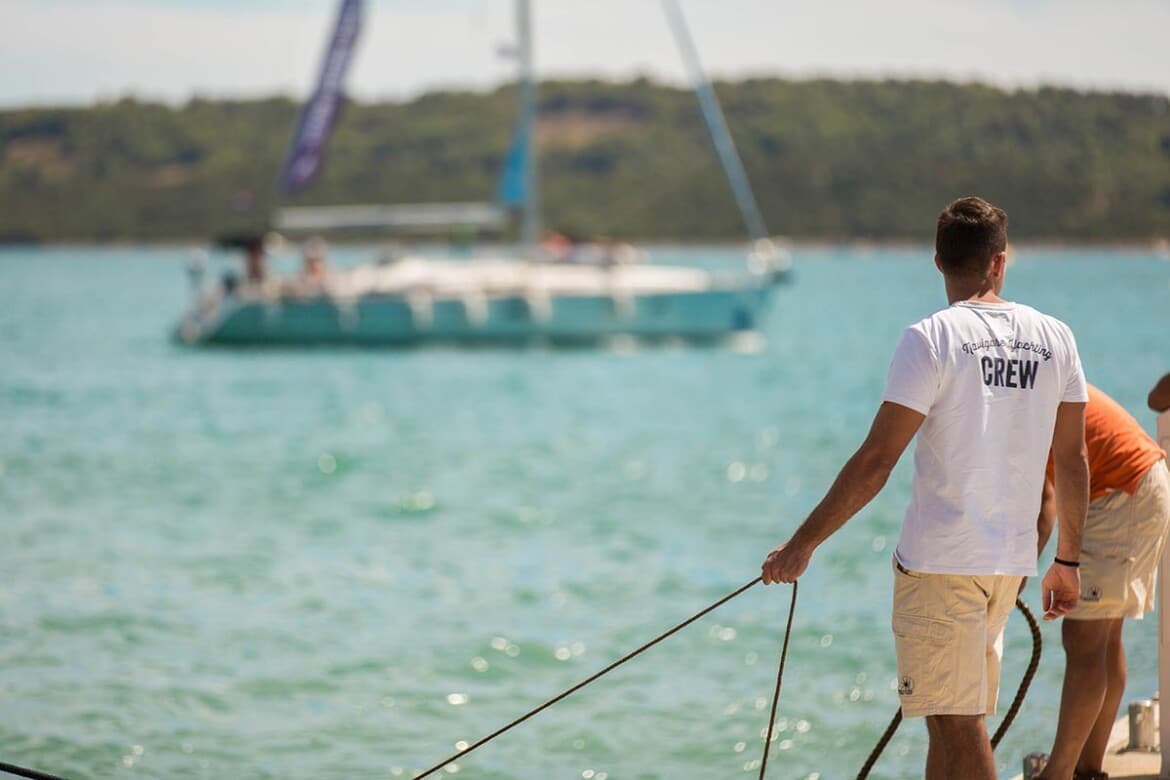
For most guests, a Croatian charter begins and ends in a marina – but during the week you will move between marinas, town quays and quiet anchorages. Understanding how marinas work in Croatia makes the whole trip calmer: you know what to expect, where you will find fuel and water, and when it is worth paying for the comfort of a secure berth.
This guide is written from the perspective of a local skipper who has checked in and out of marinas up and down the Adriatic. Use it together with our main Sailing in Croatia guide, Best Anchorages in Croatia and Itinerary Library to plan a week that combines comfortable marina nights with beautiful bays.
How Marinas Work in Croatia
Croatian marinas are well organised by Mediterranean standards. Most have floating or fixed pontoons with laid moorings, clear staff on the piers and reception teams who speak English. During the main season, especially Saturdays, they are busy with charter check-ins and turnarounds.
A few things to keep in mind:
- Base marinas – where you start and finish your charter. Check-in and technical handover happen here; see our Check-in & Check-out guide.
- Transit marinas – marinas you visit mid-week, usually for one night of shore power, showers and provisioning.
- Town quays – not full marinas but organised mooring lines along the promenade, often with electricity and water.
On a typical seven-day route you might spend two or three nights in marinas or on town moorings and the rest at anchor or on buoys.
Main Marina Chains and Types
Croatia has about 85 marinas (the official 2024 count, 20 of them dry marinas ashore), most of them in three groups: ACI (22 marinas, state-founded, the most consistent), D-Marin (large, modern, at Sukošan, Mandalina and Borik) and a long tail of independents, some of which — Frapa in Rogoznica, Punat on Krk — are the best on the coast. Alongside them, town quays and konoba buoys make up most of a real charter week.
Across Croatia you will encounter three broad categories of marinas:
- Large chains – such as ACI and a few private groups, with consistent standards, reception procedures and pricing bands.
- Independent marinas – often family or locally owned, sometimes with a more relaxed atmosphere and slightly different pricing.
- Municipal or concession-run town harbours – usually along the seafront of towns like Hvar, Vis, Šibenik or Dubrovnik, where you moor bow- or stern-to.
Charter companies will tell you exactly which base marina your boat is in. When you plan your route, use our regional Destinations pages and itineraries to decide which transit marinas make sense for fuel, water and crew comfort.
The chains, and what each one means in practice
| Group | What to expect | Where |
|---|---|---|
| ACI Marinas | 22 marinas, predictable standard, online booking | Whole coast, Umag to Dubrovnik |
| D-Marin | Large and modern; superyacht berths | Sukošan, Borik, Mandalina |
| Independents | Variable — and includes the very best | Frapa (Rogoznica), Punat (Krk), Baotić (Trogir) |
| Town quays | Municipal, in the middle of the town; call ahead at midday in season | Hvar, Korčula, Vis, Bol, Milna |
| Konoba buoys | A restaurant's own buoys, often free with dinner | Everywhere in Dalmatia — the best value afloat |
Charter bases are almost all in the first three groups. The rest of the week is where you choose, and a good week usually mixes all five.
Marina Regions – From Istria to Dubrovnik
From north to south, marinas follow the natural sailing regions of the Croatian coast. Here is a high-level overview so you can connect your departure base with areas you want to explore.
Istria & Kvarner
In Istria and Kvarner you will find marinas around Pula, Rovinj and Poreč and on islands like Krk, Cres and Lošinj – the charter fleets lie mostly around Pula and at Punat on Krk. This region works well if you are driving from central Europe and want a mix of mainland towns and islands.
Zadar & Northern Dalmatia
Near Zadar and Biograd there are several larger marinas that serve routes towards the Kornati and Žut archipelagos. They are efficient charter hubs with good service and many transit options along the way.
Šibenik, Split & Trogir
Šibenik and its river offer protected marinas close to the Kornati, Zlarin and Kaprije areas. Further south around Split and Trogir you will find the busiest charter bases in Croatia, serving routes that include Brač, Hvar, Vis and central Dalmatian islands.
Dubrovnik & Southern Dalmatia
In the south, Dubrovnik has marinas and mooring facilities that act as gateways to the Elaphiti islands, Mljet, Korčula and beyond. This region feels a bit more remote and can be a good choice if you prefer fewer charter boats around you.
Prices and Reservations
Exact marina prices change each season, but a few principles stay the same:
- Fees are usually based on length overall (LOA), with catamarans charged a surcharge – roughly 1.5 to 2 times a monohull of the same length.
- Expect higher prices in July and August, especially in premium locations near famous towns.
- Most marinas include water and electricity in the nightly fee; town quays usually meter them.
For a rough budget, combine marina nights in your plan with information from our Charter Prices guide. If you want marina berths on specific nights in high season, it is wise to book or call ahead during the day, especially near Hvar, Vis or Dubrovnik.
Facilities You Can Expect in Croatian Marinas
Most marinas along the coast offer a similar set of services:
- Shore power (230V) and water on the pontoons.
- Sanitary facilities: toilets and showers.
- Reception, weather information and basic assistance with mooring.
- Restaurants, cafés or bars on site or within walking distance.
- Small supermarket or minimarket for provisioning.
- Sometimes laundry, boat repair services, chandlery and parking.
When you choose between different bases or transit marinas, think about what your crew values most: easy access from the airport, nearby old town for sightseeing, or simply a quiet place to sleep before departure.
What a Croatian marina berth includes
| Facility | Normally included? | Notes |
|---|---|---|
| Water and electricity at the berth | Yes | Metered on a town quay |
| Showers and toilets | Yes | Card or code from reception |
| Mooring assistance (marinero) | Yes | They take your lines and hand you the lazy line |
| Wi-Fi | Usually | Reliable in the big chains, patchy elsewhere |
| Fuel dock | Not everywhere | Plan the Friday refuel around where one is |
| Laundry | Sometimes | Larger marinas; hand it in by mid-morning |
| Waste and used oil disposal | Yes | Required — never overboard |
| Chandlery / repairs | Larger marinas | ACI Split, Mandalina, Punat, Frapa |
Croatian marinas moor stern-to on a lazy line laid from the seabed: you back in, the marinero passes the line, and you walk it forward and make it fast before the bow blows off. Brief the crew before you approach, not during.
Fuel Docks and Practical Turnaround Tips
Every charter ends with refuelling and returning the yacht on time. Base marinas either have their own fuel dock or rely on a nearby public station. On busy Saturday mornings these can get crowded.
Some practical tips:
- Plan to refuel on Friday afternoon if possible and return to base for a relaxed last night.
- Ask your charter company which fuel station they recommend and when it is least busy.
- Keep an eye on fuel consumption during the week, especially with motor yachts or when motoring in calm conditions.
- Use our Check-in & Check-out guide to organise timing and paperwork.
Marinas vs. Town Quays vs. Anchorages
Croatia gives you three main overnight choices, each with pros and cons:
- Marinas – most comfort and services, higher price, more formal atmosphere.
- Town quays – you are right in the centre of places like Hvar, Vis or Šibenik; lively but sometimes noisy and exposed.
- Anchorages and buoy fields – maximum nature and privacy, but you must handle anchoring and weather decisions. See Best Anchorages in Croatia for ideas.
Most crews enjoy a mix of all three. Your exact balance depends on whether you travel with small children, older family members or friends looking for nightlife.
Choosing Your Ideal Start Base
Your base marina effectively decides which region you will sail. Use our Croatia overview and regional pages for Split, Trogir, Zadar, Šibenik, Dubrovnik, Istria and Kvarner to compare:
- How easy it is to reach the marina from your home country.
- What kind of routes you can sail in one week from that base.
- Whether you prefer busier central areas or quieter northern/southern regions.
If you are flexible with dates and airports, the regional pages show bases that avoid the very peak crowds while still giving you access to famous islands.
Sample Week: Balancing Marinas and Bays
Here is a simple example of how you might combine marinas, town quays and anchorages on a central Dalmatian route starting from Split or Trogir:
- Saturday: Check-in at base marina, short shakedown sail, first night in a nearby bay with buoys.
- Sunday–Monday: Anchorages around Šolta or Brač; one night on a town quay for a restaurant dinner.
- Tuesday: Transit marina near Hvar or Vis for showers, laundry and water.
- Wednesday–Thursday: Quiet bays and mooring fields, using tips from our Best Anchorages guide.
- Friday: Fuel dock and return to base marina for final night and check-out.
You can adapt this pattern to other regions using suggestions from the Itinerary Library and Best Sailing Routes in Croatia.
Next Steps – Boats, Routes and Offers
Once you have a sense of which marina region suits you, the next step is choosing the right yacht type and planning a realistic route.
Start under the Yacht Charter Croatia hub, where you can compare Catamarans, Sailboats and Motor Yachts. Our bareboat, skippered and crewed charter services cover all experience levels.
When you send an enquiry through Get a Quote, tell us which marina regions and islands appeal to you most. The boats that fit arrive by email within minutes, followed by sample routes, and a person answers your replies – so on arrival you can focus on sailing, not logistics.
Croatian marinas are more than parking places for boats – they are the starting points of stories. With a bit of planning, they become calm, predictable parts of your holiday, leaving all the adventure for the sea outside the breakwater.